
The Visual Culture of Sufism in France and Germany
Sufism in Western Europe
Ethnographic fieldwork in France and Germany, 2018–2020 | Marie Skłodowska-Curie Individual Fellowship, Horizon 2020 | Grant Agreement No. 794958 (SufiVisual) | Host: IDEMEC, Aix-Marseille Université/CNRS | Partner institution: Centre for Islamic Theology (ZITH), University of Tübingen | Research outcomes: 3 book chapters, 1 peer-reviewed article, 1 special issue (open access) and collective volume: Kuehn, S. (2024) guest editor of Female Visions: Women and Visuality in Contemporary Islamic Mysticism, Religions 16, 9 chapters; monograph: Vision and Visuality in European Sufism, 12 chapters


European Commission/CORDIS project results: “Tracing the path of mystical Islam in European territory”
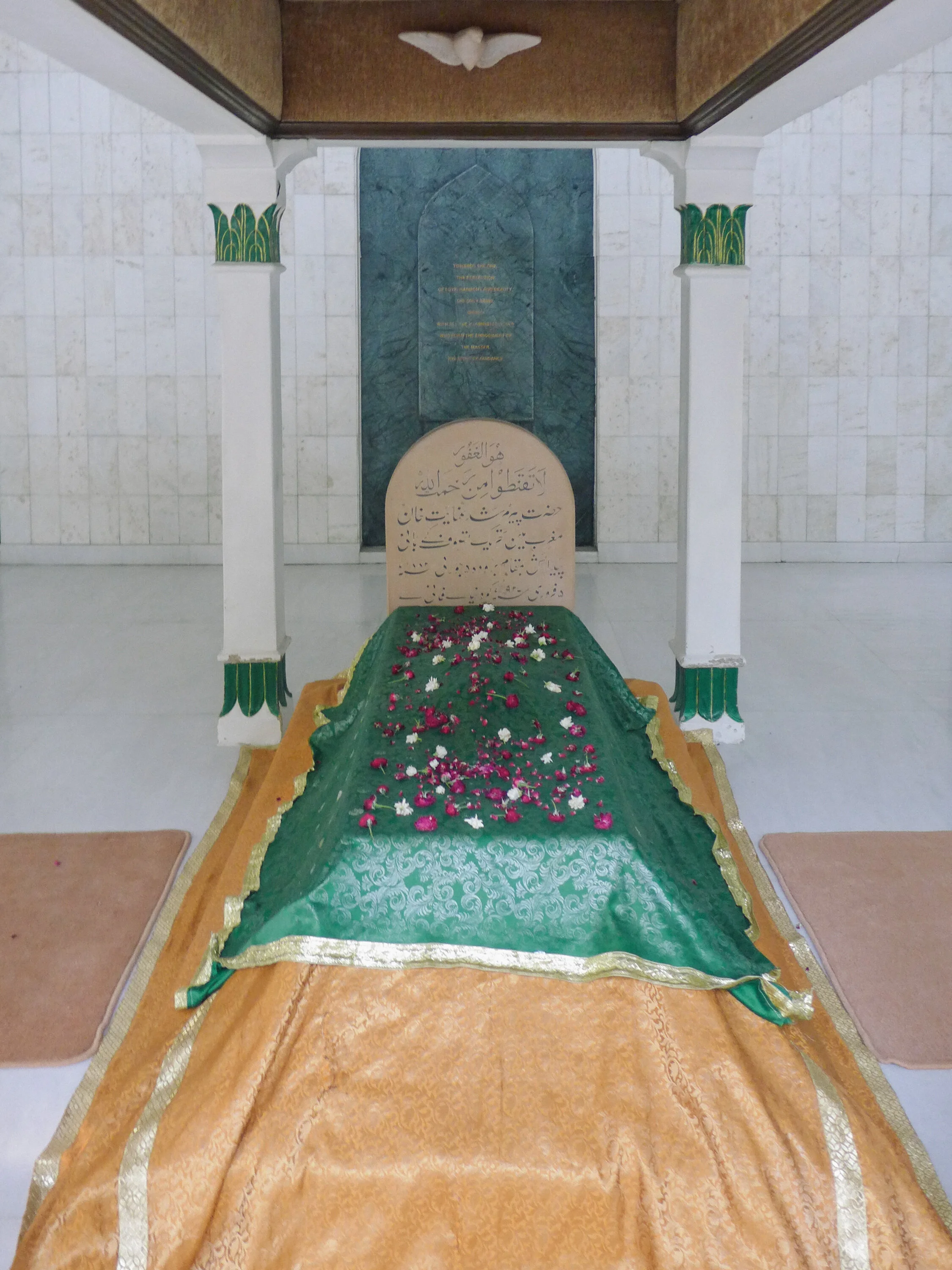
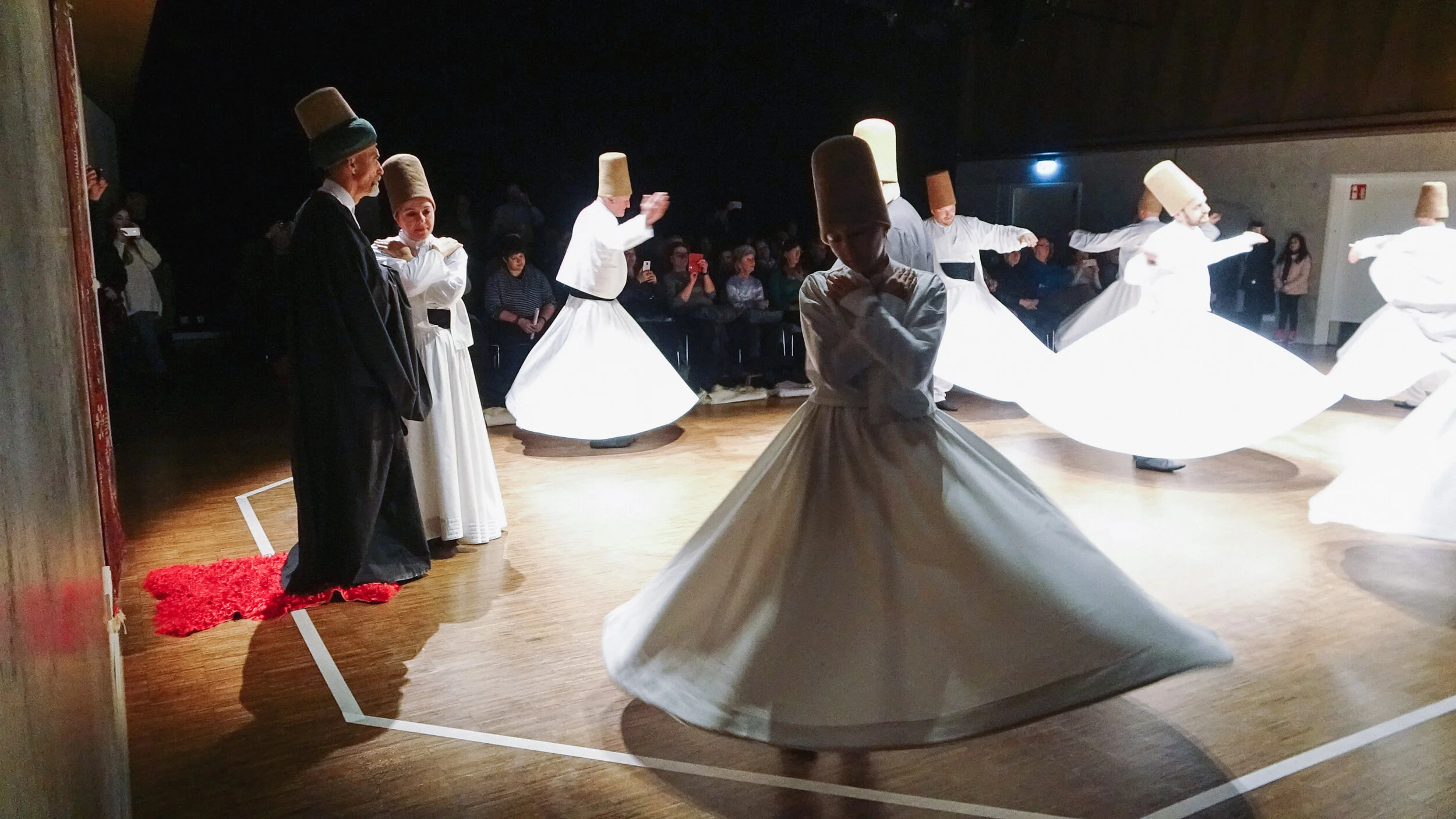
SufiVisual explored the religious visual culture of Islamic mysticism, or Sufism, in France and Germany by investigating the ways in which visual culture actively constructs and shapes religious concepts and informs our understanding of Islam. The project was premised on the proposition that Sufi visualizations of belief and piety draw upon shared conceptual vocabularies and repertoires of images, symbols, objects, and practices, while acquiring different meanings within interpretative communities shaped by distinct social, religious, cultural, and political contexts. At its center was the question: What roles do vision and the image play in the devotional behavior and religious imagination of contemporary Sufi orders?
A gender-sensitive perspective formed one dimension of the project, particularly in relation to gendered imagery, symbolism, and religious authority; these questions subsequently developed into a distinct strand of research on gender and female Islamic mysticism.
SufiVisual also investigated Sufi visual expression within the changing social and religious landscapes of France and Germany. It examined how Sufi communities negotiate inherited religious traditions within European contexts shaped by migration, conversion, secularism, religious pluralism, and changing forms of public and private religiosity. In this way, the project considered visual culture not merely as a reflection of religious ideas but as an active medium through which religious identities, practices, relationships, and understandings are formed and communicated.
The project addressed three interrelated problématiques: the ways in which questions of vision and visualization inform, and often complicate, intercultural encounters and intra-Muslim debates concerning the alleged prohibition of figural imagery in Islam; the enduring legacy of Orientalist claims that associated an alleged Islamic denigration of vision with an equally alleged inability to modernize; and the ways in which visual practices negotiate religious and mystical meaning through changing patterns of engagement with tradition, institutionalization, and modernity.
The interdisciplinary project brought together approaches from anthropology, ethnography, religious studies, theology, gender studies, and art history. Particular importance was placed on bringing emic perspectives, the understandings and interpretative categories of practitioners themselves, into dialogue with comparative scholarly analysis. Photography formed an integral part of this methodology, functioning both as documentation and as a mode of ethnographic inquiry into questions of access, representation, visibility, and the ethics of looking.
From SufiVisual to Vision and Visuality in European Sufism
The completion of SufiVisual did not bring these questions to an end. Rather, research initially centered on Sufi communities in France and Germany became the foundation for a broader comparative inquiry into vision, perception, and presence in European Sufism. The project increasingly revealed the need to place contemporary Western European Sufi communities in dialogue with the historically rooted Sufi traditions, devotional landscapes, shrines, pilgrimage practices, saintly genealogies, and ritual cultures of Southeastern Europe.
This research has developed into the book project Vision and Visuality in European Sufism. Moving beyond visual culture narrowly conceived, the study asks how Sufi worlds become perceptible through saints and shrines, images and calligraphy, bodies and ritual, relics and devotional objects, pilgrimage landscapes, architecture, music, light, dress, photography, domestic spaces, and digital media. Vision is understood not as an exclusively optical phenomenon but as an embodied and multisensory mode of perception entangled with touch, sound, movement, memory, imagination, and affect.
The expanded project asks how practices of seeing and being seen mediate presence and absence, manifestation and concealment, memory and charisma, intimacy and belonging. It brings Sufi communities in Western Europe into conversation with historically rooted traditions and devotional landscapes in the Balkans and Southeastern Europe, thereby questioning simple distinctions between Islam and Europe, East and West, migration and indigeneity, or tradition and modernity.
SufiVisual thus remains a completed research project in its own right, with its particular geographical focus, methodological framework, research questions, and outcomes. At the same time, it constitutes an important intellectual and ethnographic foundation for Vision and Visuality in European Sufism, in which questions first explored in France and Germany have developed into a wider comparative investigation of how people learn to see, perceive, and make present within Sufi traditions.






Conference
Female Visions: Women and Visuality in Contemporary Islamic Mysticism, 16–18 October 2020, organized in the framework of Sara Kuehn’s project “The Visual Culture of Sufism in France and Germany” with funding from the European Union’s Horizon 2020 research and innovation program under the Marie Skłodowska-Curie grant agreement No. 794958 (SufiVisual).
Organized jointly by the Institute of Mediterranean, European and Comparative Ethnology (IDEMEC), Aix-en-Provence, the Centre for Islamic Theology, University of Tübingen, and the Academy of the Diocese of Rottenburg-Stuttgart.
The three-day conference was first scheduled to take place 3–5 April 2020 (Call for Papers) before a public audience, but had to be postponed because of the pandemic. Originally planned to take place face to face, it was redesigned as both an in-person and online conference, 16–18 October 2020. However, shortly before the conference new restrictions on social gatherings were imposed because of an increase in COVID-19 cases in the Stuttgart region, so the entire conference was redesigned to be held online.
The conference program offered an academic component with 16 academic papers with discussion, a practitioner component by 6 female Sufi leaders and an artwork section (see abstracts). With presenters and panel chairs from 13 countries and 7 different time zones who came together to share their work, the conference attracted much attention and received over 525 registrations. On the first evening an online dhikr (ritual of divine remembrance) was guided by Shaykha Fawzia Ar-Rawi Ar-Rifai. The conference also featured anartwork section with video and sound installations. The presentations of the conference participants and the female Sufi leaders were recorded and can be viewed online on the conference website.